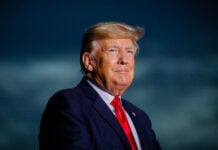
House Republican leaders are working to revive a controversial AI moratorium by inserting it into this year’s National Defense Authorization Act, following President Trump’s call for a unified national AI rulebook.
The push has reignited Republican infighting and is expected to draw unified Democratic opposition. Majority Leader Steve Scalise (R-LA) is seeking NDAA language that would bar states from enacting or enforcing their own AI regulations for several years, overriding the growing patchwork of state laws. Trump boosted the effort on Truth Social, insisting that a single federal standard is needed to stay competitive with China and prevent “woke” or censorious state-level AI rules.
This isn’t the GOP’s first attempt. A wider AI moratorium was included in Trump’s domestic agenda bill earlier in 2025, but the Senate rejected it 99–1. Republican leaders now hope the must-pass defense bill will succeed where standalone tech legislation failed, forcing hesitant lawmakers to accept the measure to keep the NDAA moving.
But some Republicans — particularly states’-rights advocates and Big Tech skeptics — argue Congress shouldn’t give Silicon Valley a regulatory timeout. The backlash grew so strong that a draft Trump executive order to override state AI laws was reportedly put on hold after bipartisan pushback.
Democrats are firmly opposed to inserting an AI moratorium into the NDAA. Rep. Doris Matsui (D-CA) and others warn that blocking state enforcement would leave consumers vulnerable to deepfakes, fraud, biased algorithms, and unchecked AI use in hiring, housing, healthcare, and elections. A bipartisan group of 36 state attorneys general has also urged Congress to reject federal preemption, arguing states need flexibility while Washington remains stuck in gridlock.
Supporters argue that a patchwork of 50 state rules would stifle innovation and hinder defense-related AI development, making the NDAA the appropriate venue for a unified national standard. However, opponents counter that the defense bill shouldn’t be used to rewrite tech policy through a backdoor maneuver — and that a moratorium would shield companies from accountability more than it would protect national security.
With NDAA negotiations wrapping up and votes expected in early December, the moratorium battle has become a three-sided clash: Trump and House leaders pushing the measure, GOP federalists resisting it, and Democrats prepared to kill it outright.
The Dennis Michael Lynch Podcast archive is available below, with the most recent on top. Never miss an episode. Subscribe to the show by downloading The DML News App or go to Apple Podcasts.